
Guardian Bikes Review: Are They Worth It for Kids?
Teaching a little kid to ride a bike is one of those milestones that's exciting and a little nerve-racking at the same time. You want them to have the confidence to take off on their own, but there's also the reality that they're still figuring out how to balance, steer, and stop, sometimes all at once.
4.6
Teaching a little kid to ride a bike is one of those milestones that’s exciting and a little nerve-racking at the same time. You want them to have the confidence to take off on their own, but there’s also the reality that they’re still figuring out how to balance, steer, and stop, sometimes all at once.
When I was a kid, your training wheels would come off and your parent would basically push the back of your bike and everyone would hope you could fly like a baby bird out of the nest, but since then, balance bikes have entered the chat. But what comes after those?
That’s what interested me about Guardian Bikes. They’re designed specifically for kids, with smaller components, a lower center of gravity, and a patented braking system that makes stopping simpler for beginning riders. You can add the pedals once you’re ready, giving your child a chance to learn how to brake and use a heavier bike before learning to pedal.
They’re also considerably more expensive than the typical kids’ bike from Target or Walmart, so are the differences actually worth paying for? We bought and tried one out to find out.
TL;DR: I do think it’s worth it. My kid loves his bike, and I love how customizable it is for this period of learning and transitioning from feet to pedals. Get one!
What Makes Guardian Bikes Different?
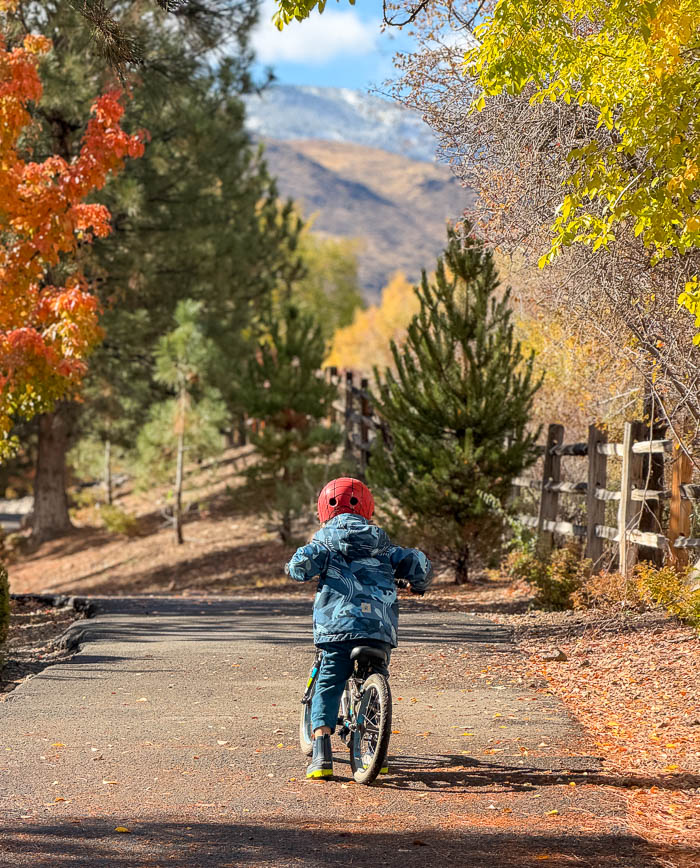
Guardian Bikes became well known after appearing on Shark Tank, where they introduced their SureStop braking system and ultimately secured an investment from Mark Cuban.
Unlike most traditional bicycles, which have separate brakes for the front and rear wheels, Guardian bikes use a single hand lever to operate both brakes.
The idea is that kids shouldn’t have to remember which brake to squeeze, particularly when they’re just learning how to ride.
But the braking system isn’t the only difference. Guardian also designs its frames around children’s proportions, with smaller grips, shorter crank arms, and a lower center of gravity to make riding and balancing easier. They also make them highly customizable including attaching pedals later on. Given we started with a balance bike and are working our way up to a pedal bike, being able to learn the brakes before the pedals is a great way to transition.
Their pedal bikes start with a 14-inch model designed for children around three to five years old and go up through larger sizes for older kids. This was the perfect gift for my four year old’s birthday.
Guardian’s SureStop Braking System
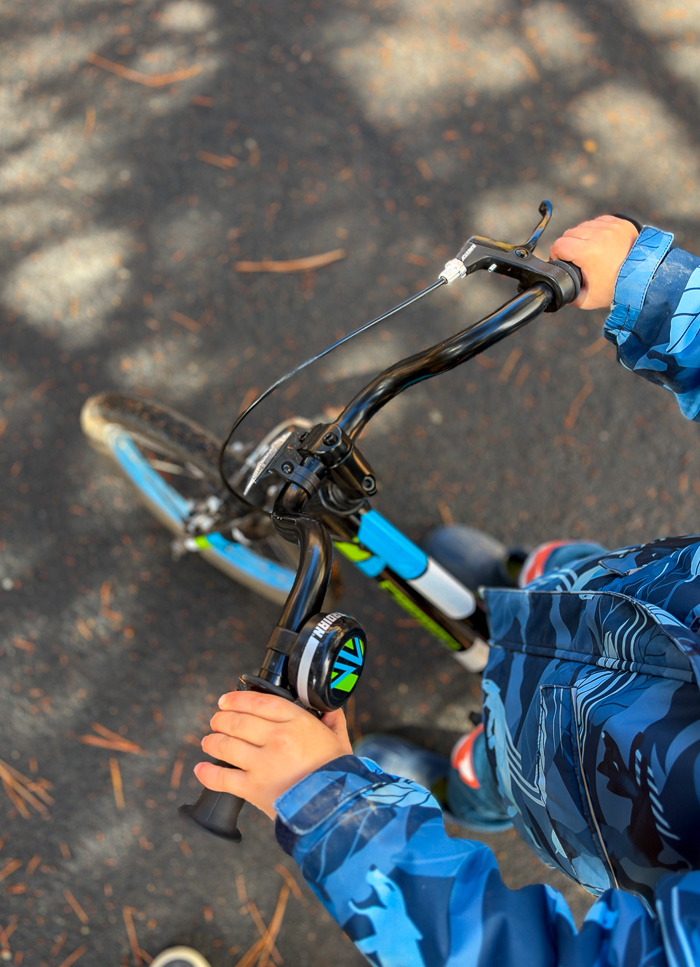
This is probably the most interesting feature of Guardian bikes and the biggest reason to consider one over a less expensive alternative.
Guardian’s patented SureStop system uses one handbrake lever to activate both wheels’ brakes. When a child squeezes the lever, the rear brake engages first, followed by the front.
On a traditional bicycle, grabbing the front brake too aggressively can cause the front wheel to stop suddenly and potentially send the rider over the handlebars (I know – it happened to me once). Guardian’s system prevents kids from applying only the front brake, which helps address that particular risk.
It also simplifies the process. Instead of learning how to coordinate two handbrakes or remembering when to pedal backward to stop, kids have a single lever to squeeze.
There is one tradeoff worth mentioning, though. Because the two brakes are connected, a failure in the rear braking mechanism can also disable the front brake. With traditional independent brakes, one can still function if the other stops working.
For a young child learning to ride around the neighborhood, though, I appreciate SureStop.
Our Firsthand Experience
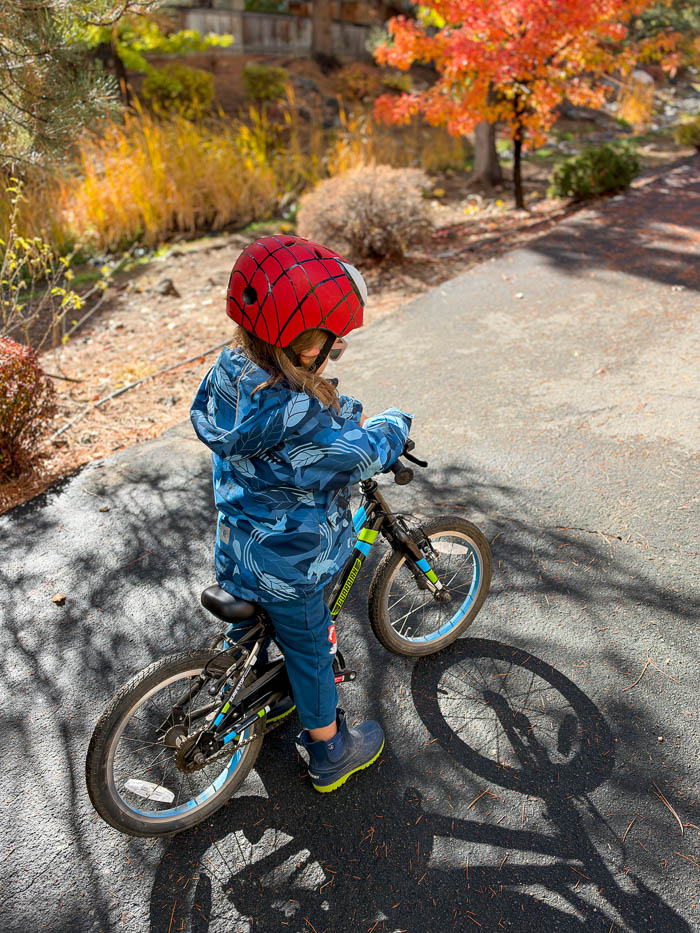
Guardian uses smaller handlebars and grips, shorter crank arms, and relatively low step-over heights. This matters because a bicycle that fits poorly can be much harder to learn on, even if the wheel size is technically appropriate for the child’s age.
The lower center of gravity is designed to make balancing and maneuvering easier, while the shorter distance between the pedals accommodates shorter legs.
For my son, that’s meant building his confidence on more uneven terrain (he even took his bike on a beginner mountain biking trail!) and being able to maneuver in the way that he wants to. He hasn’t had issues falling due to center of gravity problems I’ve seen his friends deal with, and while that might be down to individual ability, I suspect the bike is helping.
We’re still working on using the hand brakes instead of feet, and soon the pedals will follow, but for learning how to maneuver a real bike vs. a super lightweight balance bike, he’s transitioned well.
How Heavy Are Guardian Bikes?
Their bikes have steel frames, which are durable but generally heavier than the aluminum frames used by premium children’s bike brands like woom. I definitely notice the difference carrying his bike vs. his old balance bike.
Here are Guardian’s listed bike weights:
| Bike size | Weight |
|---|---|
| 12-inch balance bike | 8.5 lbs |
| 14-inch pedal bike | 16 lbs |
| 16-inch pedal bike | 17.5 lbs |
| 20-inch small | 20.7 lbs |
| 20-inch large | 22.9 lbs |
| 24-inch | 25.5 lbs |
A 17.5-pound bike might not sound particularly heavy to an adult, but that’s a substantial amount of weight for a four-year-old to maneuver.
This is probably the main thing I’d weigh against the benefits of Guardian’s braking system.
A lighter bike can be easier for a small child to get moving, steer, and pick up after falling. Guardian bikes are lighter than many inexpensive department-store options, but they aren’t among the lightest children’s bikes available.
If weight is the priority, woom is worth comparing. If the simpler braking system is more important to you, Guardian has an advantage there.
Are Guardian Bikes Worth the Price?
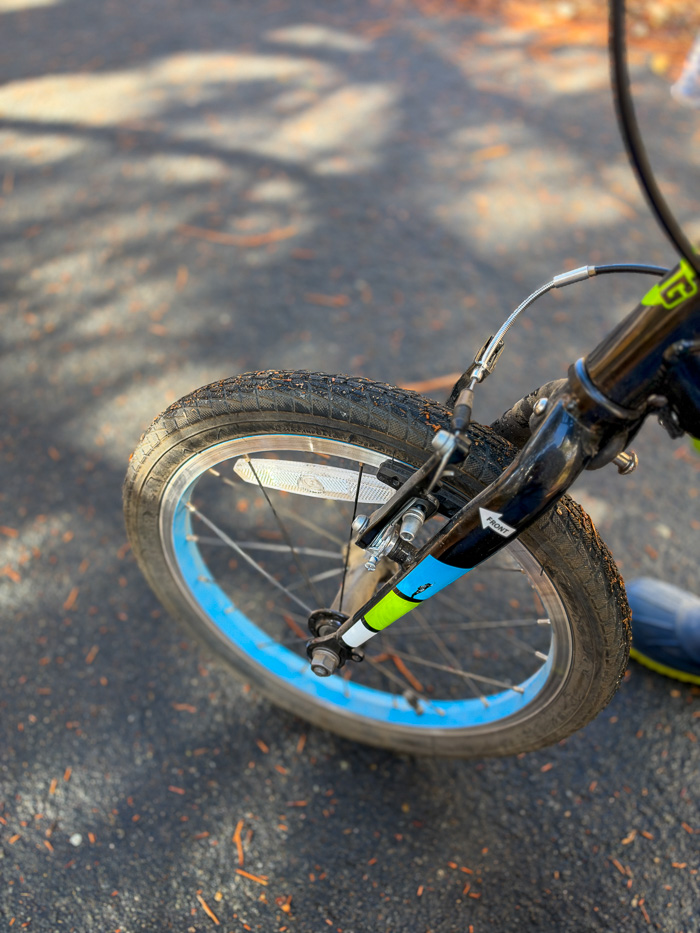
Guardian’s 14-inch and 16-inch bikes are currently listed at $249 each, putting them in the middle of the children’s bike market.
They’re substantially more expensive than most department-store bikes but less expensive than some of the premium lightweight options, but what you’re really paying for is the combination of kid-specific geometry and SureStop braking.
The braking system is innovative, but it has limitations, and proper fit, helmet use, supervision, and riding conditions still matter.
For a preschooler learning to ride, the single-lever braking system and absence of coaster brakes make Guardian a great choice.
This post may contain affiliate links, which help support Parenthood Adventures at no additional cost to you.